
FTL vs. LTL: Choosing the Right Freight Option in Southern California
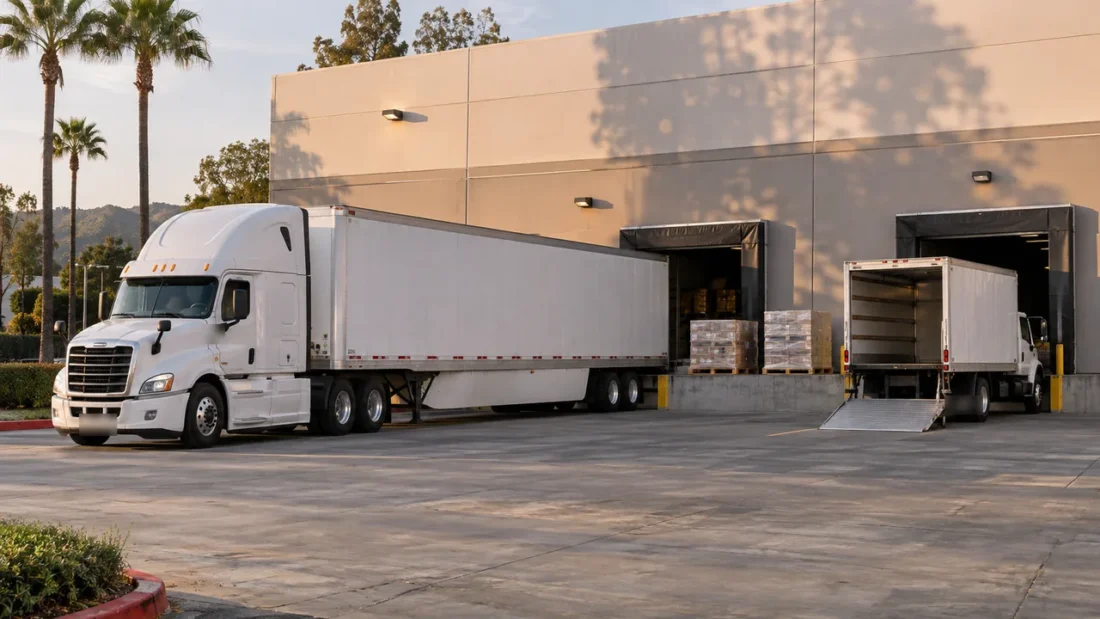
If you ship pallets around Southern California, at some point someone asks whether the load should go full truckload or less than truckload. The FTL vs LTL decision comes down to a handful of questions: how much freight you have, how fast it needs to arrive, how much handling it can take and what the delivery address looks like. This guide walks through each one in plain English, with a few local examples, so you can make the call with confidence.
FTL vs LTL: The Short Version
Full truckload (FTL) means a trailer is reserved for your freight alone. It is picked up, driven straight to the delivery address and unloaded, with no other shipper’s freight on board. Less than truckload (LTL) means your pallets share a truck with other shipments, and the truck makes several stops on its route.
As a rule of thumb, FTL fits big or time-critical loads, and LTL fits smaller shipments where saving money matters more than saving a few hours. The rest of this guide covers the gray area in between, which is where most of the real decisions happen.
How FTL Works
With full truckload, you are paying for the truck, not just the space your pallets use. The driver loads your freight at the pickup, heads directly to the delivery address and unloads it. There are no other stops, no transfers to another truck and no one else’s freight being moved around yours.
That makes FTL predictable. The arrival time depends on the pickup, the distance and the traffic, and very little else. It also means your pallets are handled twice, once at loading and once at delivery, which matters for anything fragile, valuable or easy to crush.
How LTL Works
With LTL, the cost of the truck is shared. Your pallets are loaded with other freight heading in the same general direction, and the truck works through a route of pickups and deliveries. You pay for your share of the truck instead of the whole trailer.
National LTL carriers also route most freight through terminals, where it is unloaded, sorted and reloaded onto another truck for the next leg. Each transfer adds time and another round of handling. Regional LTL on a local route has fewer transfers, but it still means multiple stops and more people working around your freight than a dedicated truck would.
Size: How Full Would the Truck Be?
Shipment size is usually the first thing to check. A standard 53-foot trailer holds about 26 standard pallets loaded single-stacked on the floor. A shipment of one to a few pallets is clearly LTL. A shipment that fills most of that trailer is clearly FTL.
The gray zone sits in the middle: a load that takes up a third to two thirds of a trailer. There, weight, distance and the delivery deadline decide it, and the only reliable way to know is to price the shipment both ways. If the freight can wait a day or two, combining several orders in a warehouse can also turn a few partial loads into one fuller truck.
Cost: What You Are Actually Paying For
The two options are priced differently, which is why the cheaper choice can flip as a shipment grows.
- LTL pricing usually depends on the weight and size of the shipment, the distance and often the freight’s class, a rating based largely on density. Extra services such as liftgate delivery or a delivery appointment are often added on top.
- FTL pricing is usually set for the whole truck on that route, whether the trailer is full or not.
For a few pallets, LTL is usually cheaper, because you only pay for your share. As the pallet count climbs, LTL charges add up, and at some point a dedicated truck costs about the same or less. When you are close to that point, ask for both quotes and compare them side by side, including any extra charges.
Speed and Handling
FTL is the faster and gentler option because it goes direct. That makes it the usual choice for:
- Retail deliveries with a firm appointment at a distribution center
- Fragile, high-value or easily damaged products
- Product launches and promotions where the stock has to be on the floor by a set date
LTL takes longer because of the extra stops, but for routine restocking that is often a fair trade for a lower bill. Good packing closes most of the handling gap: sound pallets, cartons stacked square with no overhang, shrink wrap and clear labels on every pallet.
Dock Access and Liftgates
The delivery address matters as much as the freight. A 53-foot trailer without a liftgate needs a loading dock or a forklift to unload, plus room to park and turn. Many businesses in Southern California, from retail storefronts to small offices and job sites, have neither a dock nor that kind of space.
That is where liftgates come in. A liftgate is a powered platform on the back of the truck that lowers pallets to the ground. Box trucks with liftgates are a natural fit for smaller LTL deliveries, and some larger dry vans offer liftgate service too. If your receiver has no dock, say so when you book, whichever option you choose.
Three Southern California Examples
A full trailer for a retail distribution center. An importer has roughly a trailer’s worth of home goods to deliver to a retailer’s distribution center in the Inland Empire, with a fixed appointment. This is FTL: one pickup, one drive east, one unload at the dock, with no other stops that could make the truck late.
A few pallets for a store in Thousand Oaks. A beverage brand needs four pallets delivered to a store with no loading dock. This is LTL on a truck with a liftgate. A dedicated 53-foot trailer would cost more and might not fit at the back door anyway.
Weekly restocking across Ventura County. A building materials supplier sends a few pallets each week to contractors and stores in Camarillo, Oxnard and Ventura. A regular LTL route handles all of them in one run, with liftgate delivery at the addresses that need it.
A Quick Checklist Before You Book
- How many pallets, and how much do they weigh?
- Does the delivery have a firm date or appointment?
- Is the freight fragile, valuable or easy to crush?
- Does the receiver have a loading dock, or will you need a liftgate?
- Will more orders head to the same area soon, so they could ship together?
If most of your answers point toward a big, urgent or delicate load, start with FTL. If they point toward a small, routine shipment, start with LTL. If you are somewhere in the middle, get both prices.
How Sooner Logistics Handles Both
Sooner Logistics runs both FTL and LTL freight on our own trucks as part of our 3PL transportation services. Our fleet includes tractors with 53-foot dry vans for full truckloads, 48- and 53-foot dry vans with liftgate service, and box trucks with liftgates for smaller deliveries. Our full truckload lanes run from Ventura County to San Bernardino County, and within Southern California we can deliver smaller shipments the same day or the next day when needed.
Because we also run 3PL warehousing in Moorpark and Simi Valley, we can store your inventory, build and wrap the pallets, combine orders headed to the same area and load them onto our own trucks. Final deliveries to stores, job sites and businesses are handled through our last mile trucking. We are a family-owned, asset-based 3PL, in business since 1973, and our trucks and warehouses are ambient, not refrigerated.
Not sure which option fits your next shipment? Call +1-805-222-2030, request a free consultation or contact our team with the pallet count, the weight and the pickup and delivery addresses, and we will tell you which way makes more sense for that load.